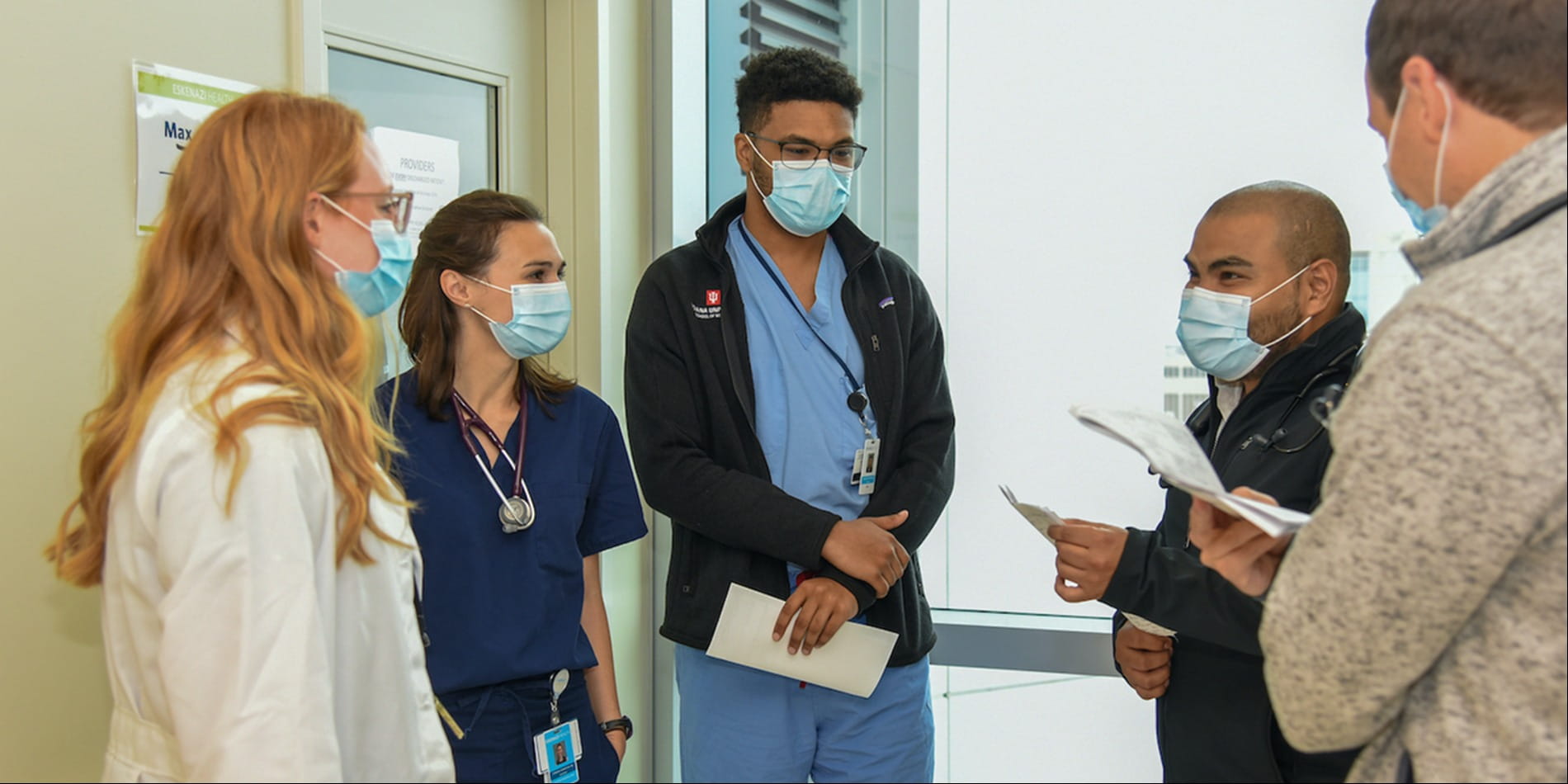
The Department of Medicine at Indiana University School of Medicine consists of ten internal medicine specialty divisions. An accomplished team of physician educators trains highly skilled, compassionate generalists and specialists to be the future leaders in clinical practice, research and academia.
Department of Medicine
Advancing research and patient outcomes while training a new generation of leaders in medicine

Education
The Department of Medicine values broad-based training of students, residents and postdoctoral candidates to fulfill local, state, national and international needs for health care providers in general and specialty fields of internal medicine.
Learn More Education

Research
An interdisciplinary approach to science is emphasized within this department, as faculty and trainees are committed to the advancement of internal medicine practice through cutting-edge research and clinical trials to discover new, advanced therapies for patients and the field.
Learn More Research

Clinical Care
Faculty and students deliver high-quality patient-centered care to a diverse population in the areas of preventative and interventional care. Optimal patient outcomes are achieved through interdisciplinary efforts among faculty providers, clinical and support staff, and the patient.
Learn More Clinical Care
Our Core Mission
We are an inclusive academic community that provides exceptional care and service, conducts transformative research, and excels in education to advance health in Indiana and beyond.

Follow The Beat
Keep up with news and announcements from the Department of Medicine on our blog, The Beat. Find more updates in the IU School of Medicine Newsroom.

Read the latest Annual Report
The Department of Medicine produces an bi-annual report to highlight to accomplishments of its faculty, learners and clinical divisions. The most recently report was released in early 2023.
Read the Report Read the latest Annual Report
1900+
Faculty Statewide
10
Specialty Divisions
20
Active Research Centers